Exchange, Decentralized. Yes, but adding an altcoin is ont as simple as tuning a ballet and modifying a. We are helping people to build easy their own exchange around the world.
Search form
By using our site, you acknowledge that you have read and understand our Cookie PolicyPrivacy Policyand our Terms of Service. I just found this projectwhich is described a. Is there a more serious, open source Bitcoin exchange? I’m aware exchanging BTC for fiat money can be quite complex, and might not fit an open source model, but an exchange specializing in crypto-currencies shouldn’t be that complicated to setup, so I think there is room for an open source one. Intersango is an open source exchange that is used at intersango. The code that Intersango runs is no longer open source as I understand it.
How to Get Started
Jump to navigation. Whether you believe that blockchain technology is poised to change the world or that it is a flash in the pan, one thing is sure: Technical and legal questions about blockchain are on everyone’s mind today. People often wonder: Is Bitcoin «open source»? But this question arises from confusion about three separate concepts: blockchains, cryptocurrencies, and open source software. Although Bitcoin is the best-known product built on a blockchain 1 , they are not the same thing. A blockchain is a continuously growing list of records that are linked together in sequence.
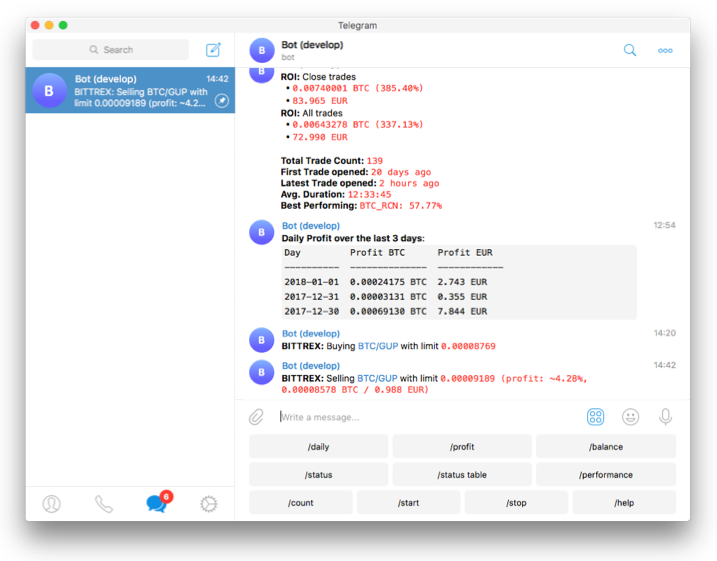
Gekko in nutshell
Jump to navigation. Whether you believe that blockchain technology is poised to change the world or that it is a flash in the pan, one thing is sure: Technical and legal questions about blockchain are on everyone’s mind today. People often wonder: Is Bitcoin free open source bitcoin exchange source»? But this question arises from confusion about three separate concepts: blockchains, cryptocurrencies, and open source software.
Although Bitcoin is the best-known product built on a blockchain 1they are not the same thing. A blockchain is a continuously growing list of records that are linked together in sequence. Each record is called a block, and each record contains, in addition to information about the transaction it represents, a cryptographic hash of the previous block.
In case you aren’t familiar with hashing, here is how it works. A «hash» is a way of representing lengthy information in a short and unique way. For example, think about your phone number. It contains a country code, a region or area code, an exchange, and a number. Each of those is an arbitrary number that identifies a location on the telephone network. To call you on the phone, no one needs to know your location—they only need to know your phone number.
Now imagine that each of the elements of your phone number—country code, area code, exchange—were determined by an algorithm instead of an arbitrary set of numbers. Anyone who had your number would be able to contact you, even if they don’t know where you are.
If someone wanted to identify you, they could ask for your phone number and check that it is correct.
But they could not «unpack» the hash to find. A hash reduces a complex set of information to a single number. Real hashes, of course, use complex mathematical algorithms to do. You may have also used a hash, without knowing it, when accessing short versions of URLs, such as with Bitly.
Because each block in a blockchain contains a hash identifying the one before it, a chain of blocks in a blockchain can’t be broken, and the integrity of the chain can be verified by anyone who has access to the chain. Even if the block contains information that is encrypted or anonymous, the integrity of the chain can be verified by checking that the hashes all line up in sequence.
Blockchain, therefore, can facilitate the movement of goods, events, transactions, assets—and, of course, digital money—among a connected network of individuals and groups, all in a way that is auditable by anyone having access to the chain. So, the first thing you should now understand is that a blockchain is much bigger than Bitcoin.
Bitcoin is just one example of a kind of transaction—the transfer of cryptocurrency—that can be tracked with a blockchain. There are two more qualities of a blockchain that you should understand: It is distributed and robust in the face of security concerns.
Each block in the blockchain contains transactional information shared over the network with all participants. A blockchain is sometimes called a «distributed ledger»—like a spreadsheet that is available to.
Although no system is completely secure, blockchains have features that make their security more robust than electronic transactions that reside in a single place or under a single entity’s control. Like the internet itself, blockchains use multiple nodes to ensure that there is no one point of failure.
Because a unique hash key is generated with every new block in the network, and any further changes to the block would alter the block’s hash as well, the system is resistant to tampering. Think of this like Wikipedia: Although anyone could change the chain, those changes would not persist unless most of the users were convinced that the change was valid. Different blockchains take different approaches to permissions, centralization, and security.
There are two types of a distributed ledger: open or public or un-permissioned and permissioned ledgers. Public ledgers like Bitcoin are accessible to everyone over the network. Every participant in a public ledger can access a copy of every transaction, write a new block to the chain, and validate new transactions. Bitcoin, for example, uses pseudonyms to identify parties conducting transactions, but the pseudonymous information is accessible to.
Permissioned ledgers are more centralized. One example is Cordaan open source blockchain project centered around permissioned ledgers with potential applications in a range of verticals, such as airline bookings and smart contracts. The maker of a permissioned ledger controls and identifies the roles of participants, enables the participants to be a part of the network, and provides participants with the encrypted keys necessary to validate blocks.
This model has been adopted by various blockchain consortiums and is popular in blockchains created by enterprises. This is just the tip of the iceberg. In any application where transactions must be auditable, blockchain can provide a means to keep the transactions secure and verifiable by.
A transaction, in this sense, can be almost anything—from a vote to a step in a supply chain. And of course, money transactions can be tracked. Bitcoin is a cryptocurrency, which is a currency secured by software encryption.
Unlike currencies issued and backed by sovereign states—like the US dollar, British pound, or Indian rupee, Bitcoins are not issued or managed by any central bank. They are managed, but only in the most basic way. Any currency has value only because of what economists call scarcity.
For a currency, this scarcity must be artificially imposed. After all, if everyone could print up money, money would quickly lose its value. In fact, Bitcoin is unusual among cryptocurrencies in its approach to scarcity in that it has a fixed supply.
When Bitcoin was created, an arbitrary limit was placed on the number of Bitcoins that could exist. As the demand for Bitcoin increased, the value increased, until eventually its price began to soar and has become quite volatile. Other cryptocurrencies do not necessarily follow the same rules and create scarcity by, for example, linking the currency to real-world items of value—similar to loyalty program points or scrip.
If you own Bitcoins, they are stored in a wallet to which only you have access. Bitcoin wallets work somewhat like your email. After setting up an email address, you need software, usually called an email client, that enables you to send or receive emails. You can either download that software to a device or access an email client over the internet. To access your email, you employ a user name an email ID and a password. Similarly, Bitcoin wallets enable you to send or receive Bitcoins.
To access your wallet, you need two cryptographic keys: a public key and a private key. Public keys are known to everyone over the distributed network like your email IDbut your private key is known only to you like a password. When you access your Bitcoin wallet with your private key, you can transfer Bitcoins with anyone over the distributed network. No one can access your Bitcoin wallet without your private key.
Consequently, every transaction you make will be recorded digitally in your Bitcoin wallet. A Bitcoin wallet is one kind of digital wallet.
There are other types of digital wallets, such as desktop wallets, cloud wallets, and mobile wallets. In the image above, users A, B, C, and D enter into various transactions. However, D has attempted to transfer more than D has in its wallet. The transactions are validated by users at large in a process called mining. The miners receive a small amount in exchange for the mining, which requires them to verify the chain. Like most money transfers today, the wallets store the result of ledger transactions, and no physical transfer takes place.
When D tries to make a transfer in this example, it is as if D had insufficient funds in its bank account, so the transaction does not work. The main difference is that the miners, and not the bank, verify the transaction. But Bitcoin is only one cryptocurrency, and cryptocurrency is only one application of a blockchain.
The only thing that is properly called «open source» is open source software. This isn’t pedantry; it is precision. The «source» refers to source code, and the open source licensing model turns on the fact that much software can be executed only in one form—binary form—but is written in another form—source code form.
Binaries cannot easily be changed by humans, so access to source code is essential in order to change the software. The open source model is designed to ensure that users of binary code have access to the source code for the binaries they are using so that they can examine, understand, fix, and improve that software. Most other things in the world do not have this quality—a dual nature where one form is readable and the other is not—so imposing the idea of open source on other things is awkward.
Although the term «open source» is often used to describe other things—from yoga to bioinformatics, to seders—the term can be misleading when applied more broadly than software. When people say something other than software is «open source,» they usually mean one of two things: either it is available publicly or it is not subject to royalty-bearing patent claims.
So, if you read or hear something is «open source,» and that thing is not software, you need to ask more questions. These days, people often say «Bitcoin is open source» or «Blockchain is open source. Blockchain is a technology or an ecosystem, and it is not the same as blockchain software. A blockchain is implemented via software, and there are various software projects that have been written to create and manage blockchains.
In this sense, a blockchain is like a mathematical formula, like the quadratic equation or the formula to change Fahrenheit to Centigrade.
You can write software to perform that function, but so could many. If coders each wrote a blockchain software program, they would all be different programs, perhaps written in different languages, with slight variations or large ones, but they would all have the same core functionality. Just as the relationship of blockchain to Bitcoin is from the general to the specific, the relationship of blockchain to blockchain software is from the general to the specific. Blockchain software mainly consists of three components: cryptography, distributed ledger, and decentralized systems.
Each of these components is implemented using software, and each of them can be either open source or proprietary. Generally, blockchain software projects developed by the community are licensed under open source licenses. On the other hand, there are private blockchain projects, which are developed and owned by various companies. In fact, some of these companies have applied for patents on their inventions as. Many of the available digital wallets are licensed under open source licenses.
So, when people say, «blockchain is open source,» they might mean that blockchain systems are often implemented with open source software.
Featured on Meta. Decentralized Trading takes place on a global P2P network of users running Bisq on their own machines. Jun Li 1 1 silver badge 8 8 bronze badges. All Downloads Go to Downloads Page. Seems still in active development github.
Comments
Post a Comment